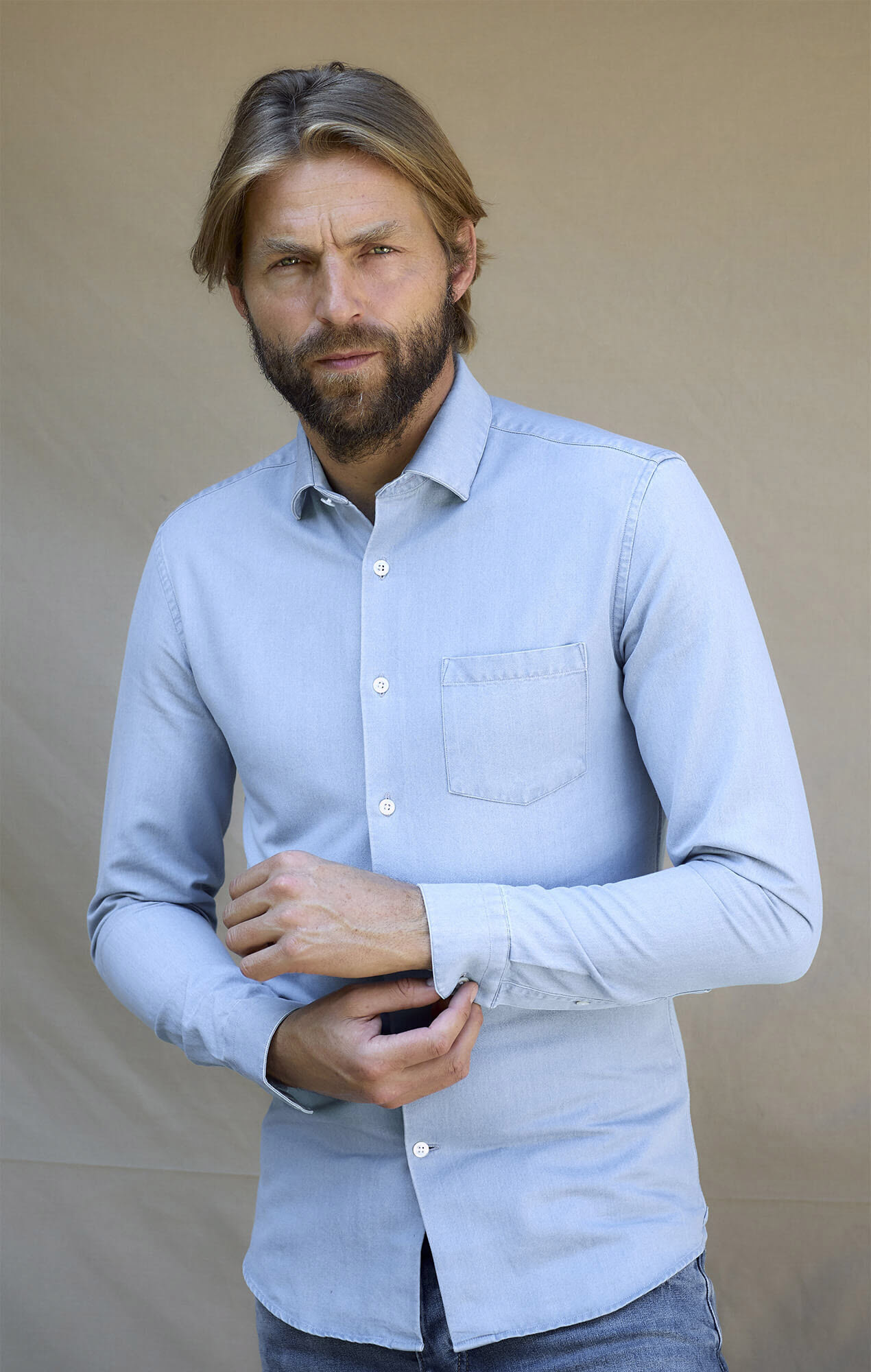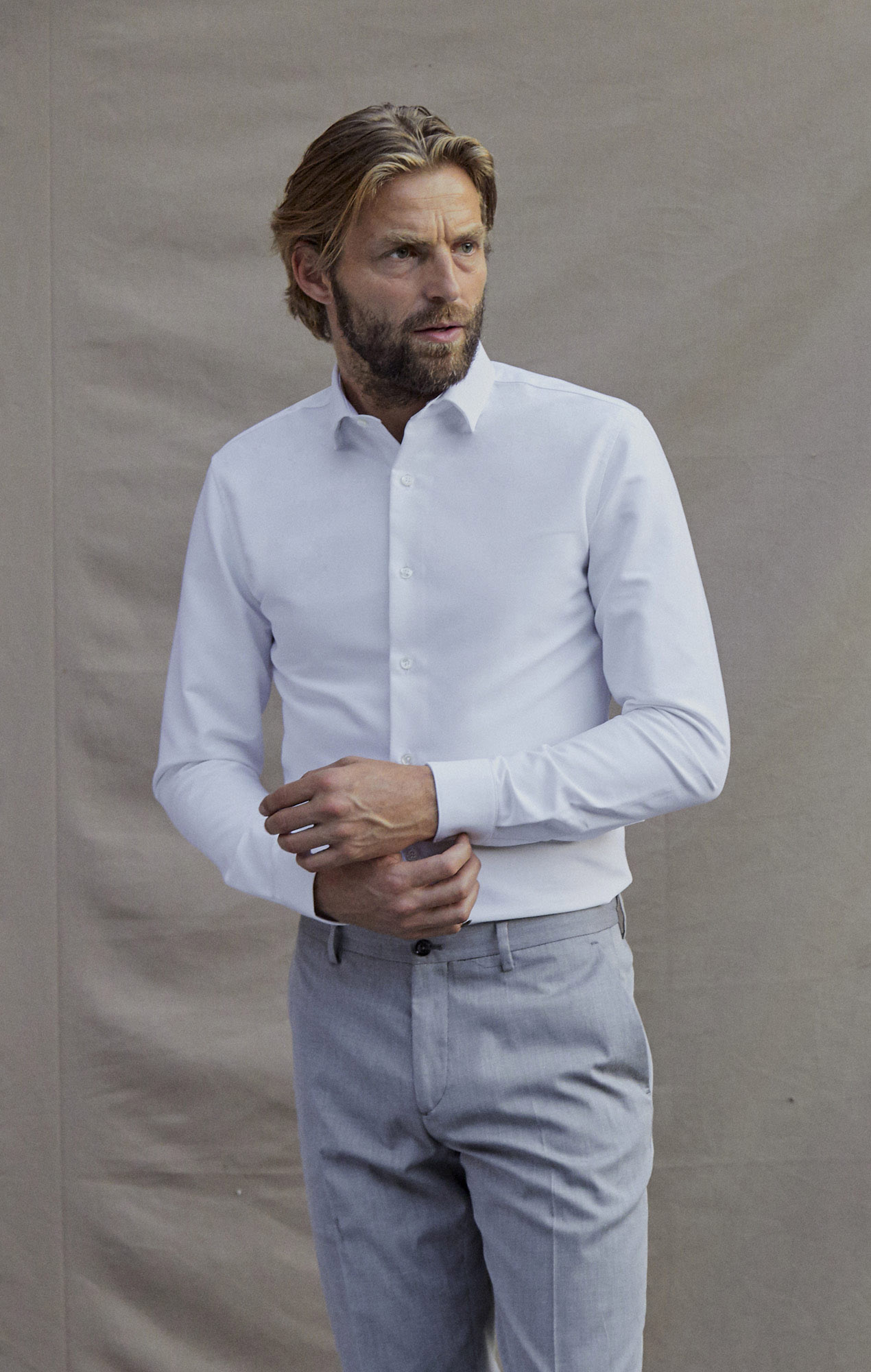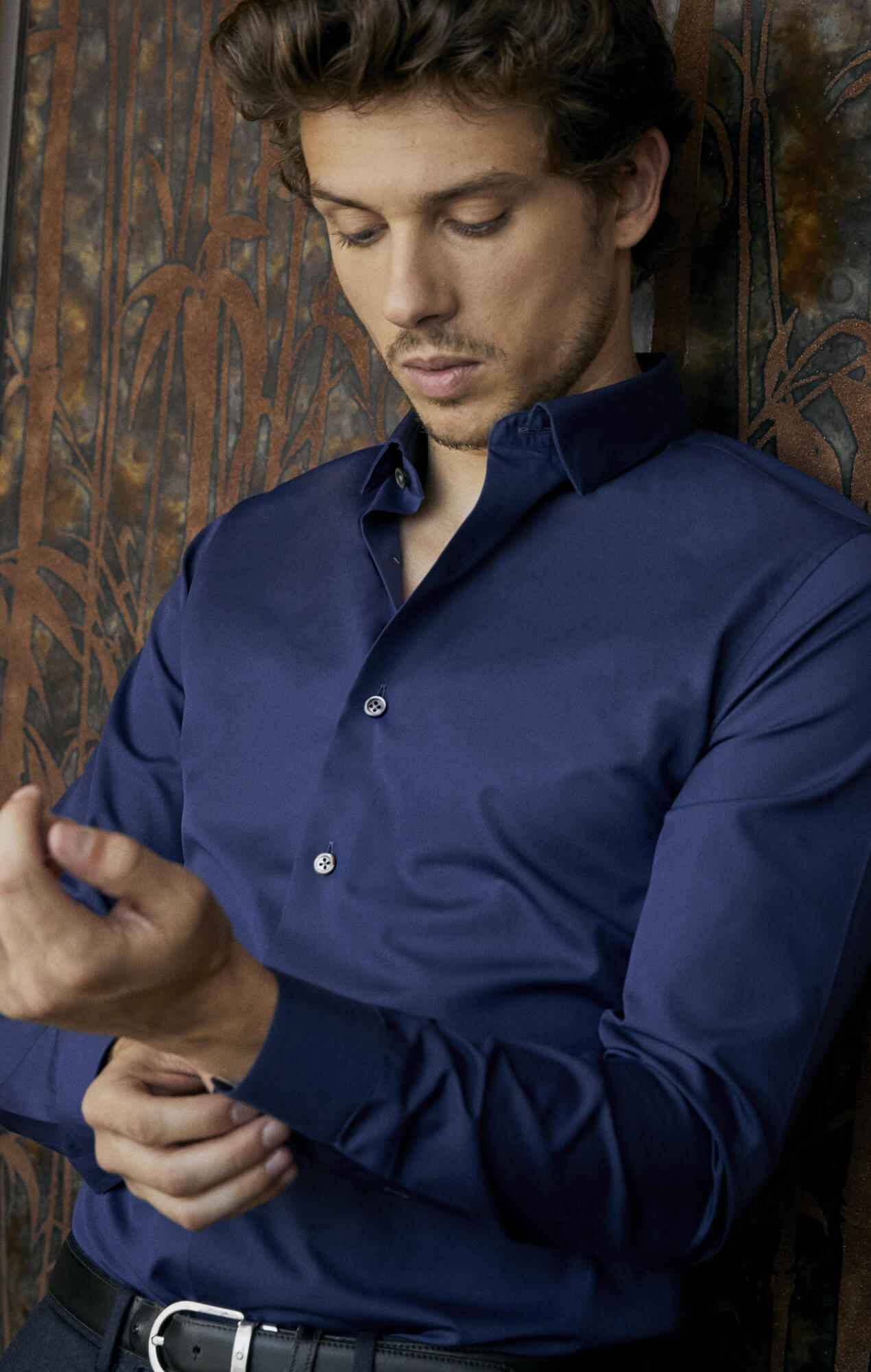
The plain shirt? It is the shirt to have in his locker room in 3 copies minimum: 1 white shirt and at least 2 blue shirts, whether formal or casual (plain shirt in light blue jeans).
Useful in all circumstances, from the pro appointment to the wedding through the glass terrace, the plain shirt remains the basic that works every time. But for this kind of clothing, the idea is still to be able to distinguish a little from the neighbor and to bet on a nice material or color:
1. The material
From the smoothest fabric to the most nuanced: let’s start with the poplin, it is the most neutral fabric, flat and often considered the most chic. The most classic are white and light blue poplin. The finer and better the cotton yarn used, the stronger and softer the fabric. But poplin also has its flaws, often considered too thin (and therefore transparent) for a white shirt, it tends to wrinkle.
Then come the twill and chevron, two materials appreciated at the office for your shirts plain blue or pink: the twill (called twill) a fabric composed of micro stripes diagonally of the fabric. The chevron is an alternation of chevrons drawn in the texture of the fabric. Often thicker than poplin, these two materials are easier to maintain (iron) than poplin but also silky.
For the office always, let’s mention the thread that is a poplin with an alternation of white threads regularly spaced. The result is a slightly chiné effect that gives life to the fabric or the dobby version close to the Oxford that follows but often reserved for a very formal shirt. Special mention for our white dobby shirt reserved for ceremonial shirts.
Among the plain materials for casual shirts, oxford is a matte fabric with a texture in the shape of small waves. There are different Oxford weaves, the more visible the relief of the material, the more casual the shirt will be. The special chambray weaving close to denim on which we alternated yarns of ecru color and yarns of blue color to give a more casual effect or plain linen blue or pink white for the holidays, you have only the embarrassment of choice.
Some examples:
Poplin shirt

Oxford shirt
Linen shirt

Denim shirt

2. The colour
Some basic rules:
- Plain blue is the key color in the office, much more than the white shirt. We will not wear a very dark blue suit with a white shirt (too much contrast), we will prefer a blue shirt with a blue jacket. The white shirt will be worn with a grey suit.
- For an interview, no risk taking: red tie on a sky blue shirt; blue tie on a white shirt.
- For a ceremony, no risk taking either: always a white shirt (the texture can vary according to tastes but you can take a dobby or a very nice silky poplin and play on the collar).
- In general, in order to match the colors, we play on contrasts: a light shirt on dark blue raw jeans, a navy blue shirt with a beige chino: it’s silly, but it works rather well.
- We can choose sky blue or white if we hesitate: super easy to match and essential for any wardrobe.
- For a more casual side, look at the more marked plain such as beige in summer, grey in winter and why not khaki or red rather in over-shirt on a white t-shirt.
- Important: pay close attention to the silky side of the fabric depending on how you use it: casual shirts must always be matte.

Plain light blue shirt (Linen)

The pink plain shirt (Dobby)

The plain white shirt (Oxford)

The navy blue plain shirt (Poplin)
3. The cut
Two main types of cuts for a plain shirt as for all shirts. Straight cut and curved cut.
The straight cut (or "regular" cut) is the one without bending; more comfortable. The older you get, the more you enjoy it.
The fitted cut (or "slim" cut) will highlight the athletic profiles. There is no rule of association between shirt pattern and cut. Take the cup you like.
4. How to wear a plain shirt?
The advantage of the plain shirt is that it goes with everything. It is even recommended if combined with a striped or checkered costume to not overload the outfit.
Similarly with a textured tie (or pattern), it is better to avoid mistakes of taste and associate it with a plain shirt.