1. Origin and evolution of denim
The history of denim dates back to the 18th century, when weavers in Nîmes, France, created a hard-wearing fabric called "serge de Nîmes". Initially, this was a low-cost staple fabric for French craftsmen. Later, the fabric was imported to the United States and used to make durable garments, notably heavy-duty work pants. The word "denim" itself is a contraction of "de Nîmes", underlining its French roots.
Denim quickly became part of American culture, becoming a preferred choice for manual laborers and miners due to its exceptional durability. Denim fabric was so strong that it withstood the rigors of daily physical labor, transforming it into an icon of functionality. In the 1870s, Levi Strauss and Jacob Davis created the first denim pants.
© LePantalon Blog.
However, the turning point for denim came in the mid-20th century, when a number of iconic brands, such as Levi's, introduced denim to popular culture, democratizing the use of this material for all types of garment. In particular, denim jeans quickly became a symbol of rebellion and youth, cementing their place in fashion history.
© Marselle.
2. Various types of wash
Denim is a robust fabric that can be washed in different shades. Denim washes such as stone wash, bleach wash and acid wash have emerged as popular techniques for giving denim a worn, vintage look.
- Stone wash: involves the use of pumice stones to soften the fabric and give it an aged look.
© Vocal Media.
© Wikipedia.
- Bleach wash: a process that uses bleach to lighten certain areas of denim, creating striking contrasts.
© Asket.com
- Acid wash: this process requires the use of aggressive chemicals to create unique patterns and irregular washes.
© Bol.com
To wash denim at home, you can opt for artisanal techniques such as hand-tearing, the use of abrasive sponges or even soaking in a salt water solution. These methods allow you to customize denim to individual preferences, but should be performed with care.
3. The Denim Shirt
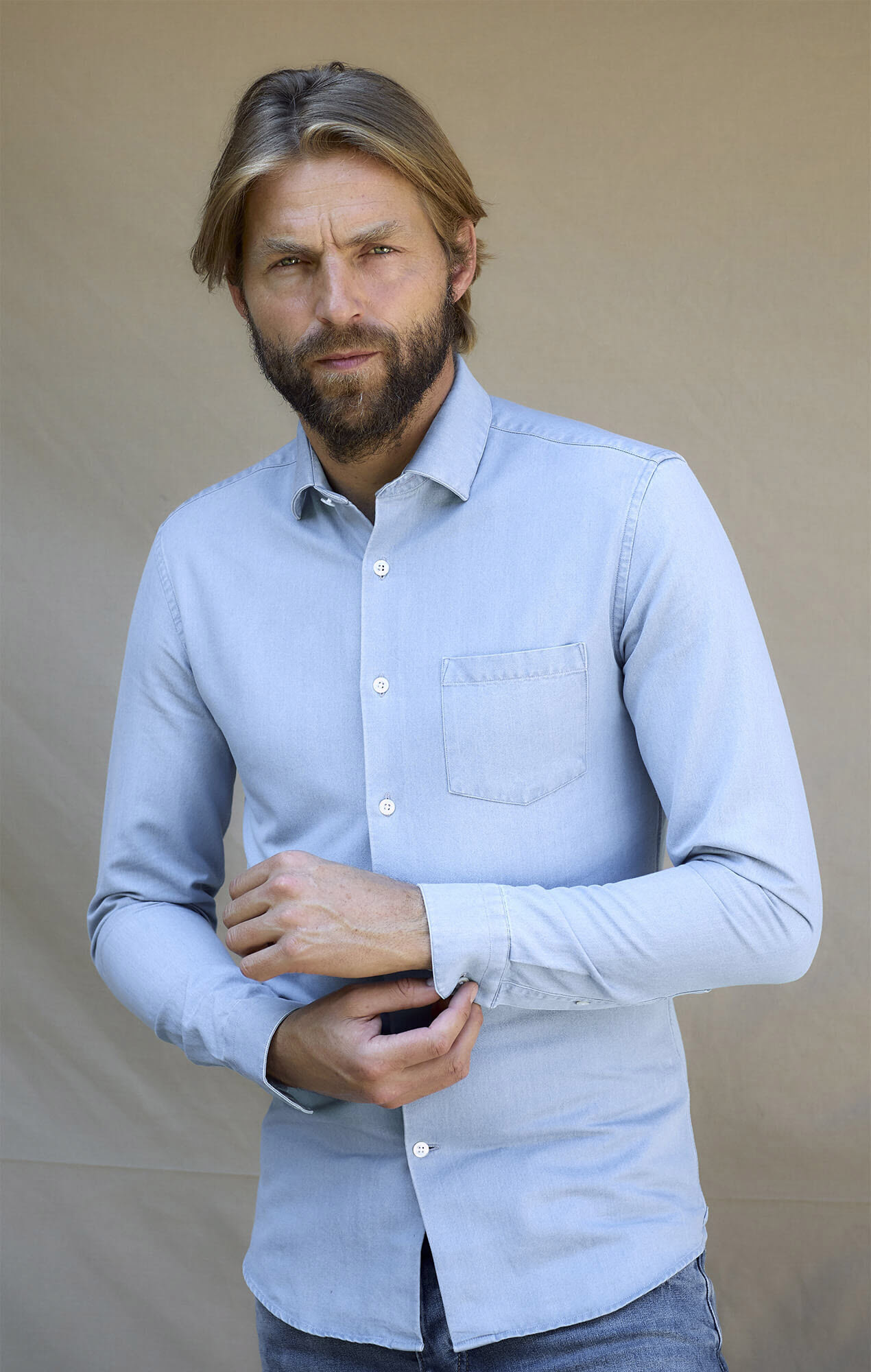
The denim shirt, often overlooked, is a key piece in any wardrobe. Indeed, if it's thin enough, for example weighing around 200g/m², it can be worn as a classic casual shirt or over a T-shirt. If its weight is at least 350g/m², then it will certainly be more comfortable to wear it as an overshirt.
For a casual look, opt for a denim shirt, lightly faded or not, worn open with a T-shirt over it. Pair with jeans and complete the look with white sneakers, for example.
For a dressier look, choose a darker denim shirt and wear it with chino pants or dark jeans. You can also add dress shoes and a leather belt.
You can find all our denim shirts on our website Première Manche.